
Driveway pavers
A paver driveway is mostly what you can't see. The base does the work: excavation to the right depth, compacted aggregate in lifts, correct bedding sand and edge restraint. Get that wrong and the prettiest paver pattern in Boca Raton will rut and settle within a couple of seasons. We build the base for the load and the soil conditions on your property.
Patio pavers
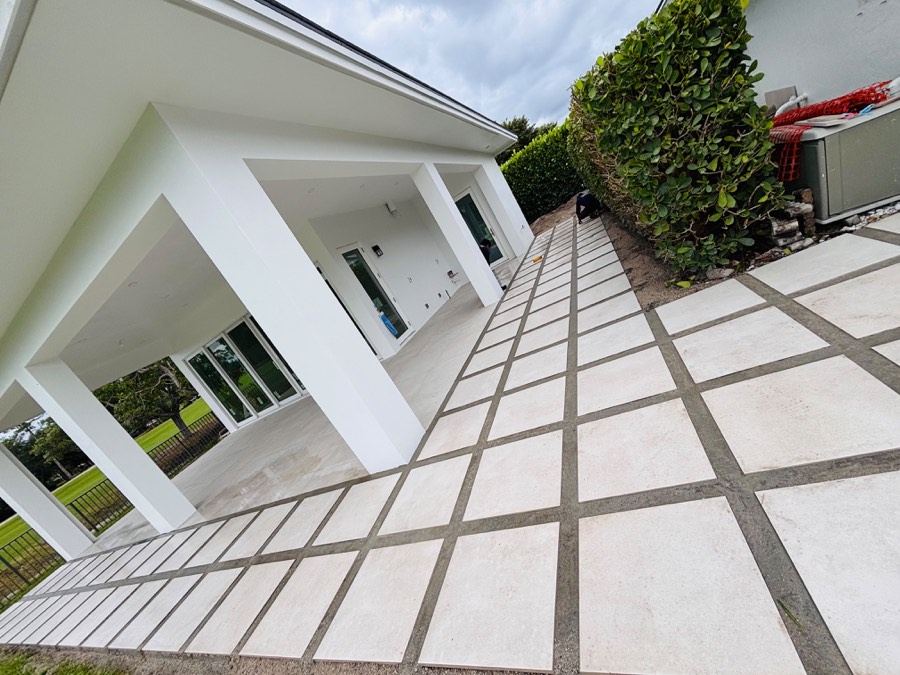
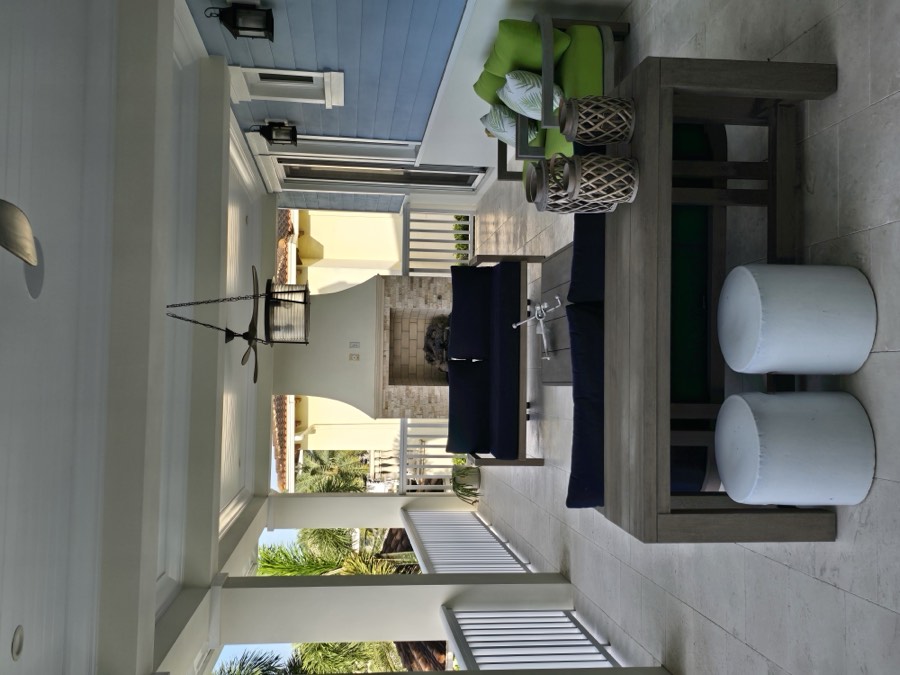
Travertine, porcelain and concrete pavers for terraces and entertaining areas, laid to fall so water clears the house. Patterns are set out from the most visible edge so cuts land where nobody looks.
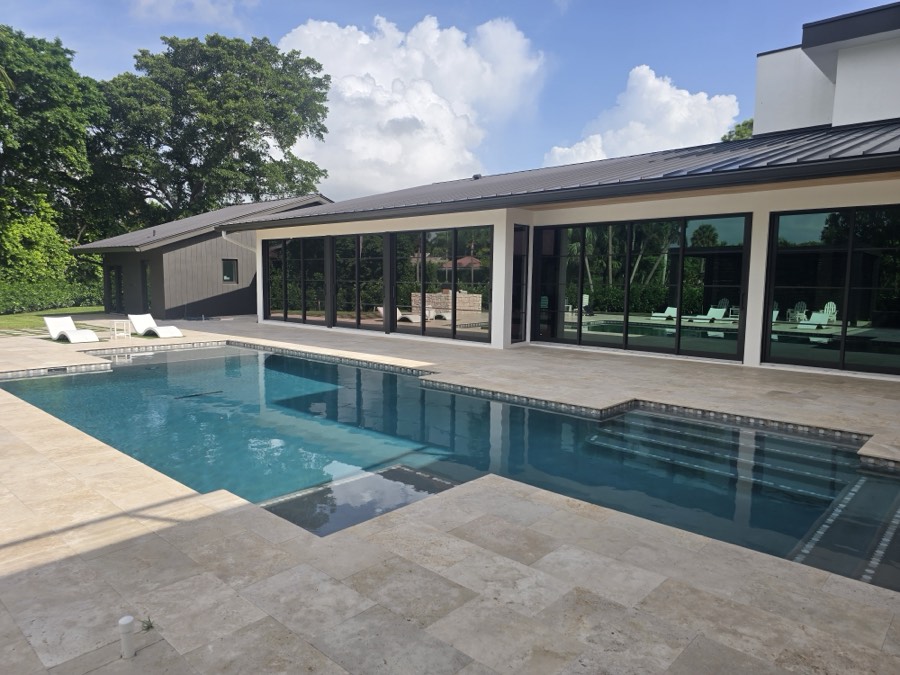
Pool deck pavers
Pool decks need slip resistance, heat performance and drainage. Travertine and shell-stone stay comparatively cool underfoot; porcelain pavers offer consistency and low maintenance. Coping, bullnose edges and expansion detailing around the shell are resolved before anything is set.
Walkways & entrances
Entry paths, side yards and service walks tied into the driveway and landscape so the hardscape reads as one scheme rather than a series of separate jobs.

Paver patterns & materials
Running bond, herringbone, basket weave, French pattern and large-format modular layouts in travertine, porcelain, interlocking concrete and brick. We lay out physical samples on site in daylight — paver color looks very different in a showroom than it does against your house.
Drainage & site preparation
Grading, French drains, channel drains, catch basins and downspout tie-ins where needed. In South Florida rainfall, drainage design is not an upsell — it's what decides whether the installation survives.
Paver installation process
Site survey and levels, excavation, base construction and compaction, edge restraint, bedding course, laying and cutting, compaction, joint sand and sealing where specified. We clean up the site and leave the driveway usable.
Base construction: what you're actually paying for
Almost every failed paver installation traces to the base. On a driveway carrying vehicle loads, that means excavating to adequate depth, installing and compacting crushed aggregate in controlled lifts rather than one thick layer, and compacting each lift properly. Sandy South Florida soils and a high water table change what's required compared with other regions. A bid that's meaningfully cheaper than others is usually saving money below grade, where you can't see it and won't know for two seasons.
Edge restraint & joint stabilisation
Pavers move outward under load unless they're restrained at the perimeter. Proper edge restraint, spiked into the base rather than laid on top of it, is what stops a driveway spreading and opening joints at the edges. Polymeric jointing sand locks the field together, resists washout in heavy rain and discourages weed growth and ants. Both are small line items that decide long-term performance.
Permeable & drainage-friendly systems
Permeable paver systems let stormwater pass through the surface into an engineered reservoir base rather than running off. In areas with drainage constraints or coverage restrictions, this can be the difference between an approvable plan and a rejected one, and it reduces standing water after storms. We'll tell you where it genuinely helps rather than specifying it by default.
Repairs, settlement & lifting
The real advantage of pavers over poured concrete is serviceability. A settled area can be lifted, the base corrected and the same pavers reinstated with no visible patch. Utility work under a paver driveway is similarly reversible. We keep surplus pavers from your installation on site where there's room, so future repairs match rather than approximate.
Color, texture & getting the choice right
Paver color is the decision clients most often regret, and almost always because it was chosen from a small sample indoors. Florida sun washes color out dramatically; what looks like a warm mid-tone in a showroom can read almost white against a bright stucco elevation. We lay out a full-size sample area on site and ask you to look at it at different times of day before committing.
Frequently asked questions
How long do paver driveways last in Florida?
Properly installed over a correctly built base, decades, and individual pavers can be lifted and replaced if damaged, which is the main advantage over poured concrete. Failures almost always trace back to inadequate base preparation.
Travertine, porcelain or concrete pavers: which should I choose?
Travertine stays cooler underfoot and suits pool decks; porcelain is dimensionally consistent and very low maintenance; concrete pavers offer the widest range at the best price. We bring samples to site so you can judge them against your house.
Do pavers need sealing?
It depends on the material and the look you want. Sealing deepens color and helps with staining, but it isn't mandatory for all products. We'll tell you where it genuinely helps.
Can you replace an existing concrete driveway with pavers?
Yes. We remove the concrete, build a proper base and install the new paver system, including any drainage corrections the original slab was masking.
Completed work
Recent projects.


Pavers across South Florida
- Pavers in Boca Raton
- Pavers in Delray Beach
- Pavers in Fort Lauderdale
- Pavers in Palm Beach
- Pavers in Jupiter
- Pavers in Wellington
We also take paver projects in Highland Beach, Deerfield Beach, Pompano Beach, Lighthouse Point, Palm Beach Gardens, Boynton Beach, West Palm Beach, Coral Springs, Gulf Stream, Ocean Ridge and the surrounding Palm Beach and Broward communities. See every area we serve →
Free · No obligation
Get your free estimate
Gerry personally reviews every inquiry and replies the same business day. Serving all of South Florida — Palm Beach & Broward County.
(561) 843-2661Let's talk
Schedule your complimentary consultation.
Tell us what you're planning and where. Gerry reviews every inquiry personally — no obligation, no pressure, just a straight answer.